
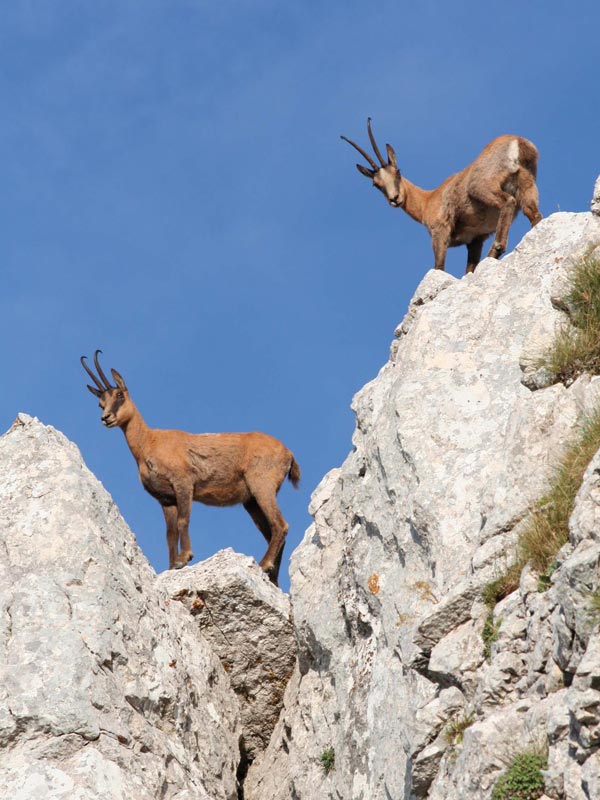
Mountain startups: from aspiring unicorns to agile chamois?
In the Venture Capital world, we are conditioned to look for “unicorns”—startups designed for the frictionless environments of digital hubs and urban clusters. But as the global economy begins to internalize the costs of climate change and resource depletion, the most significant “undervalued assets” are to be found in the physical world.
For a Fund Manager, looking to expand his portfolio, the mountain ecosystem represents a fascinating, if paradoxical, investment frontier. It is an environment characterized by a staggering wealth of Natural Capital and a chronic lack of Financial Capital. Here, the “unicorn” model would starve. What we need instead is the chamois (il camoscio): a venture built for the rugged, the vertical, and the resource-constrained.
As rural and mountain areas are attracting new residents and “digital nomads”, this injection of highly skilled Human Capital can produce a different kind of innovation, one rooted in nature and local communities.
The Natural Capital Frontier: Resilience as a Moat
For a long time, the VC industry viewed mountain territories through the lens of leisure or “lifestyle” businesses. This is a profound strategic error. These regions are the primary providers of Ecosystem Services—from carbon sequestration and water purification to the preservation of biodiversity and soil health.
When we talk about “Natural Capital,” we are talking about the essential infrastructure of life. However, this capital is currently “frozen.” It is rich in intrinsic value but lacks the financial mechanisms to be leveraged. The “chamois” startup is the vehicle that can bridge this gap, turning the protection and optimization of these services into scalable, innovative business models.
From a GP’s perspective, these companies offer a different risk profile. They are inherently resilient, often born out of the necessity to solve localized, high-impact problems—ranging from circular bio-economy and precision forestry to decentralized energy grids. Their “moat” isn’t just IP; it is their territorial anchoring. They operate in niches where the barriers to entry are high due to the ruggedness of the environment, yet the global scalability of their solutions (applicable to mountain and rural regions worldwide) is frequently underestimated.
The paradox is that while the “chamois” are masters of survival, they often lack the “levers” to scale. They have the grit, but they lack the fuel.
Rich in Assets, Poor in Liquidity
The most striking reflection for a VC professional is the disconnect between value and price in these regions. Mountain massifs are the “water towers” of Europe; they are the lungs of the continent and the custodians of biodiversity. In the emerging era of Natural Capital Accounting, these regions are arguably the wealthiest parts of the country.
Yet, there is a systemic failure in the transmission of capital.
- The Proximity Bias: Most Italian VC activity remains concentrated within the Milan-Turin-Rome triangle. This creates a “geographical discount” where high-potential deep-tech or ag-tech ventures in rural areas struggle to secure even seed-stage attention.
- Infrastructure Friction: While digital nomadism has been touted as a savior for rural areas, the reality of launching an innovative startup—not just a remote-work desk—requires physical infrastructure and talent clusters that the current financial ecosystem is hesitant to fund outside of urban hubs.
A Rare and Struggling Breed
We must be honest: today, these startups are a rarity, and those that do exist are struggling. The “rural penalty” is real. Founders in these areas face a triple threat:
- Isolation from Financial Networks: The distance from Milan or London isn’t just geographical; it’s a barrier to the “warm introductions” that fuel seed rounds.
- Lack of Specialized Support: Traditional accelerators are built for SaaS. They don’t understand the Capex requirements of a bio-economy venture or the regulatory hurdles of working in protected alpine zones.
- Human Capital Friction: It is difficult to attract and retain the specialized expertise needed to scale when the local ecosystem lacks the density of an urban hub.
The Limits of “Territory-Agnostic” Hubs
We have seen interesting experiments like The Liquid Factory. While it represents a vital step in anchoring innovation within a mountain territory, there remains a disconnect. Being located in the mountains is not the same as innovating for the mountains.
Often, these hubs act as remote outposts for digital innovation that could just as easily exist in a downtown co-working space. They lack a specific focus on Natural Capital as a source of value. To truly unlock the potential of the periphery, we need a model that doesn’t just put “tech in the mountains,” but treats the mountains as the primary R&D laboratory for the green transition.
Investing in the “New Marginality”
For the VC industry, the opportunity lies in bridging this gap. We need to move beyond seeing the mountains as a “leisure sector” (tourism/hospitality) and start seeing them as a laboratory for climate-resilience and resource-efficiency.
The “chamois” model shouldn’t just be a curiosity; it should be a blueprint for a more sustainable venture ecosystem. If we can apply the rigor of VC scaling to the inherent resilience of mountain-born innovation, we might find that the next “fabulous” returns don’t come from another fintech app in a glass tower, but from a courageous venture solving the world’s most tangible problems from the side of a mountain.
When we talk about “Natural Capital,” we are talking about the essential infrastructure of life. However, this capital is currently “frozen.” It is rich in intrinsic value but lacks the financial mechanisms to be leveraged. The “chamois” startup is the vehicle that can bridge this gap, turning the protection and optimization of these services into scalable, innovative business models.
The Thesis: Incubators specialized on Natural Capital
If we want to transform these rare “chamois” into a robust asset class, we cannot just wait for them to emerge and grow by themselves. We need specialized incubators tailored to the mountain ecosystem.
These incubators should serve as:
- Translators of Value: Helping founders quantify “Ecosystem Services” into metrics that resonate with ESG-focused LPs.
- Innovation Sandboxes: Working with local communities to pilot innovative land management, decentralized production models, and circular agri-food chains.
- Infrastructure Bridges: Providing the physical labs and pilot-plant facilities that rural startups cannot afford on their own.
Investing in “chamois” startups is, ultimately, a strategic play on Natural Capital. As carbon markets mature and biodiversity credits emerge, the companies that have mastered the “steep terrain” of rural innovation will be the ones holding the keys to the most valuable resources on the planet.
It is time to stop waiting for these startups to appear spontaneously. We must build the infrastructure—the incubators and the specialized funds—that allows them to thrive. The mountains are rich in capitals; they are simply waiting for the right financial architecture to climb.
The question for us is no longer just “Will it scale?” but “Can it endure?” In the mountains, the answer is already etched into the landscape. Now, it’s time for the capital to climb higher.
More insight into the Italian Startup scene, a report by Crunchbase.
Leave a Reply
Want to join the discussion?Feel free to contribute!